If you source food additives, hydrocolloids, or color ingredients for the U.S. or EU markets, 2026 is not a quiet year on the regulatory calendar. In Washington, the U.S. FDA has proposed the most significant structural overhaul of the GRAS system since 1958, while accelerating approvals of plant-derived color additives and reopening long-dormant reviews of synthetic antioxidants such as BHA. In Brussels, the European Commission and EFSA have simultaneously tightened specification limits for seven widely used hydrocolloids, withdrawn guar gum from infant formula, and raised the scientific data bar for all new additive applications from July 20, 2026 onward.
For buyers, the practical question is no longer "is this ingredient approved?" — it is "does my supplier's documentation, specification sheet, and supply chain still meet the 2026 version of the rule?" This article maps the concrete changes, separates what is final from what is still proposed, and lists the compliance steps procurement and QA teams should take before their next contract renewal.
I. Why 2026 Matters for Additive Sourcing
Two regulatory philosophies, long separate, are converging in the same direction: both the FDA and the European Commission want (a) greater transparency into what is actually in the food supply, (b) tighter specification control over impurities, trace elements and microbial load, and (c) an explicit tilt toward plant-derived and fermentation-derived alternatives where safety evidence supports them. None of these shifts is dramatic on its own; collectively, they raise the documentation burden on ingredient suppliers and shorten the reformulation runway for finished-food brands.
II. United States: Three Shifts on the FDA Side
A. Mandatory GRAS Notification — the Proposed Rule (Docket FDA-2025-N-3262)
On August 11, 2026, the FDA published a proposed rule in the Federal Register that would replace the decades-old voluntary GRAS notification program with a mandatory filing obligation. Under the proposal, any manufacturer or ingredient supplier that concludes a substance is Generally Recognized As Safe before placing it into interstate commerce would have to notify the FDA, submit the substance identity, conditions of use, and the safety basis supporting the conclusion. The agency would also expand its public inventory of GRAS notices, and substances already on the market under prior self-GRAS conclusions would come under improved post-market oversight. Public comments close on December 9, 2026.
What this means for buyers: the rule is not a pre-market approval — products may still be marketed while FDA reviews — but the supplier-side paper trail will no longer be optional. When you next qualify a new ingredient, ask explicitly whether a GRAS notice has been filed (and closed with "no further questions"), or whether the supplier intends to file once the rule is finalized. Self-GRAS conclusions without a filed notice will become a liability, not a convenience.
B. Color Additives: Natural Sourcing and the "No Artificial Colors" Signal
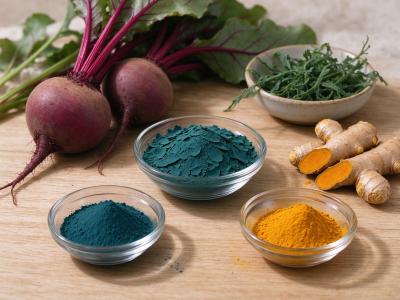
On February 5, 2026, the FDA announced a new enforcement approach to "no artificial colors" claims and, on the same day, approved beetroot red as a new color option and expanded the authorized use of spirulina (Arthrospira platensis) extract across human foods. This brings the total number of new food color options approved under the current administration to six, and openly frames the move as support for the industry's transition away from petroleum-based synthetic colors. A separate final order (91 FR 52919, effective March 23, 2026) followed, with a subsequent delay of the expanded spirulina use date to give the industry additional transition time.
Buyers should treat natural color sourcing — beetroot red, spirulina extract, turmeric, anthocyanins, paprika — as a mainstream reformulation path rather than a premium niche. If your brand still relies on certified synthetic colors for orange, green or red shades, now is the time to pilot natural equivalents and lock in stable supply before retail customers accelerate their own "no artificial colors" policies.
C. Post-Market Re-assessments: BHA and the Watch List
On February 10, 2026, the FDA launched a comprehensive post-market re-assessment of butylated hydroxyanisole (BHA, CAS 25013-16-5 / 121-00-6), the agency's first formal re-examination of this long-listed antioxidant in decades. BHA remains legal at the federal level as of October 2026, but the direction of travel — an active RFI, a pending prohibition petition, state-level bans effective from 2028, and major retailer exclusions — is unambiguous. We covered this in detail in our September 23, 2026 post on BHA's regulatory status; the practical takeaway for buyers is to map your BHA exposure now, request fresh toxicological and stability data from your supplier, and pre-qualify tocopherol-based and rosemary extract alternatives before a mandatory reformulation is imposed.
III. European Union: Tighter Specifications and a Higher Scientific Bar
A. Commission Regulation (EU) 2026/196 — Seven Hydrocolloids, New Limits
Published on January 28, 2026 and applicable from August 18, 2026, Commission Regulation (EU) 2026/196 amends Annex II of Regulation (EC) No 1333/2008 and the corresponding specifications in Regulation (EU) No 231/2012 for seven widely used hydrocolloids: carrageenan (E 407), locust bean gum (E 410), guar gum (E 412), gum arabic / acacia gum (E 414), xanthan gum (E 415), pectins (E 440) and starch sodium octenyl succinate (E 1450). The revisions, triggered by EFSA's updated scientific opinions, do three concrete things:
- Tighten maximum limits for toxic elements (notably lead, arsenic, mercury and cadmium) in the specifications for E 410, E 412, E 414, E 415, E 440 and E 1450.
- Introduce new microbiological criteria that suppliers must meet on every batch.
- Withdraw the authorisation of guar gum (E 412) in food category 13.1.1 (infant formula) and in 13.1.5.1 (dietary foods for special medical purposes for infants); only a narrow, time-limited permission up to 10,000 mg/kg remains in 13.1.5.2 for liquid formulas containing hydrolysed proteins, peptides or amino acids.
For buyers of thickeners, stabilisers and gelling agents into dairy, plant-based beverages, sauces and infant nutrition, this is the single most actionable change in 2026: pull your current spec sheets for E 410, E 412, E 414, E 415, E 440, E 407 and E 1450 against the August 18 limits, and request a fresh COA and impurity declaration from each supplier. Infant-formula producers, in particular, must reformulate away from guar gum and toward carrageenan, locust bean gum or xanthan systems now — there is no long transition window.
B. EFSA's Updated Food Additive Guidance (Effective July 20, 2026)
On January 20, 2026, EFSA published its revised Scientific Guidance on Food Additives. The updated methodology applies to every application submitted under Regulation (EC) No 1333/2008 from July 20, 2026 onward — covering both genuinely new additives and proposed changes to the conditions of use of already authorised ones. The revised guidance reflects the latest thinking on chemical characterisation, manufacturing-process description, specification purity, exposure assessment and the updated requirements for toxicological data. Practically, a supplier that wants to extend the use levels of an existing ingredient into a new food category should expect a longer, more data-intensive review than applications filed before mid-2026.
C. The Long Re-evaluation Programme — Where It Stands
Under Regulation (EU) No 257/2010, EFSA is required to re-evaluate all food additives authorised before January 20, 2009. As of September 10, 2026, the European Commission's dashboard shows 315 additives originally scheduled for re-evaluation, 137 scientific opinions published covering 245 individual additives, and 70 additives still awaiting EFSA opinion. The tail of the programme is exactly where further use-condition restrictions — like the guar-gum withdrawal above — are most likely to land. Buyers sourcing any legacy E-number should treat "already authorised" as a status that can be narrowed at any time, and should keep an eye on the EFSA output queue for the specific ingredients in their bill of materials.
IV. What Buyers Should Do Now — A Practical Checklist
- Map exposure. List every additive on your BOM, flag the destination market (US, EU, both), and mark any ingredient already under FDA or EFSA review — especially BHA, legacy hydrocolloids, and certified synthetic colors.
- Refresh the documentation file. For each SKU, ask the supplier for: a COA issued after the August 18, 2026 EU specification changes; an impurity/heavy-metal declaration matching Regulation (EU) 2026/196 limits; microbial certificates; and, for US shipments, the status of any GRAS notice or the supplier's commitment to file once the mandatory rule is final.
- Pre-qualify reformulation alternatives. If your formula depends on BHA, guar gum in infant nutrition, or petroleum-derived certified colors, pilot natural alternatives now — tocopherols/rosemary extract, xanthan/locust bean/carrageenan systems, and beetroot red/spirulina/turmeric colors — before retailer or state-level rules force a rushed switch.
- Track the open dockets. Mark December 9, 2026 (US GRAS comment deadline) and monitor the EFSA re-evaluation queue and FDA color-additive and post-market review pages; these are the next three trigger points that will change what you can legally buy and label.
Build supplier resilience. Prefer suppliers who can ship multi-market-compliant material from a single lot — same batch meeting both FCC/USP-grade US expectations and the tightened EU 2026 specs — to avoid dual-spec inventory and cross-docking complexity.

Conclusion
The 2026 regulatory moves on both sides of the Atlantic are not headline-grabbing bans — they are quiet, structural tightenings of transparency, impurity control and scientific evidence. None of them makes conventional food additives illegal tomorrow. But collectively they raise the bar on supplier documentation, shorten the runway for reformulation, and reward buyers who have already mapped their exposure. The purchasing teams that win in 2027 will be the ones that spent Q4 2026 auditing their spec sheets, locking in multi-market-compliant supply, and piloting the natural alternatives regulators are openly steering the industry toward.
Leafchem is a professional manufacturer and supplier of food additives, cosmetic ingredients and fine chemicals. From fermentation-derived nisin and food-grade lactates to synthetic antioxidants such as BHA, high-purity methylparaben, and natural plant extracts — including spirulina, beetroot, rosemary and tocopherol-based color and antioxidant lines — we ship with full COA, batch traceability, heavy-metal and microbial declarations aligned to the 2026 EU specification updates, and regulatory documentation support for both FDA and EU channels. To discuss your 2026 reformulation and compliance needs, contact our team today.


 Réseau IPv6 pris en charge